Picture House

The screen

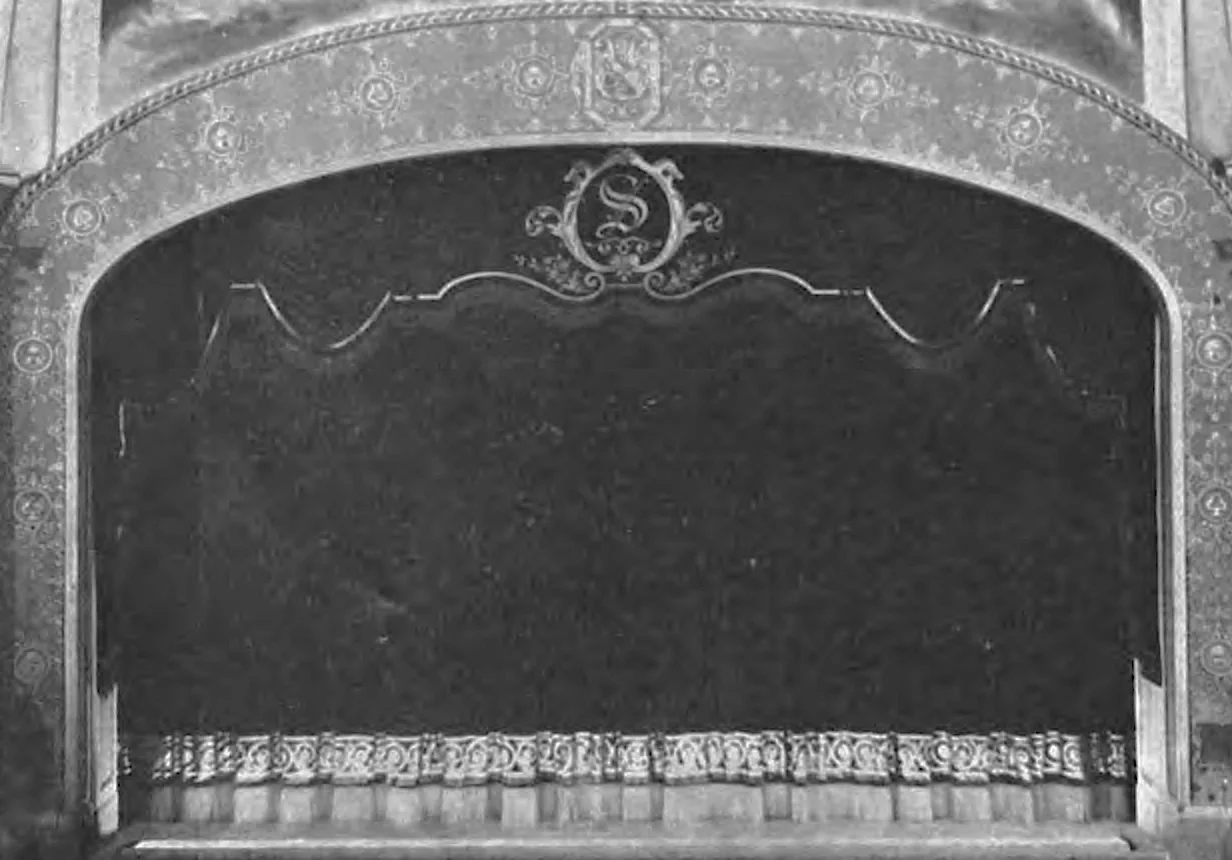
The stage of the Strand Theatre in Brooklyn in 1919, with a painted arch above and a heavy velvet curtain drawn across the opening.

Tonight

A Christmas Carol

Silent, 13 minutes

Choose a picture

Three questions for the drive home

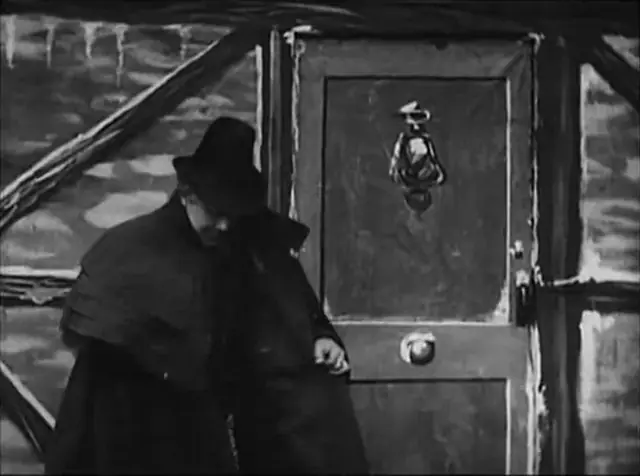
Scrooge, or Marley’s Ghost, 1901

  1. Scrooge sees other families keeping Christmas. What did he see that he had been missing?
  2. Marley’s ghost came to warn him. Who warns you when you are heading the wrong way?
  3. What is one thing you could give away this week that you have been holding on to?
He said to them, “Beware! Keep yourselves from covetousness, for a man’s life doesn’t consist of the abundance of the things which he possesses.”

Luke 12:15
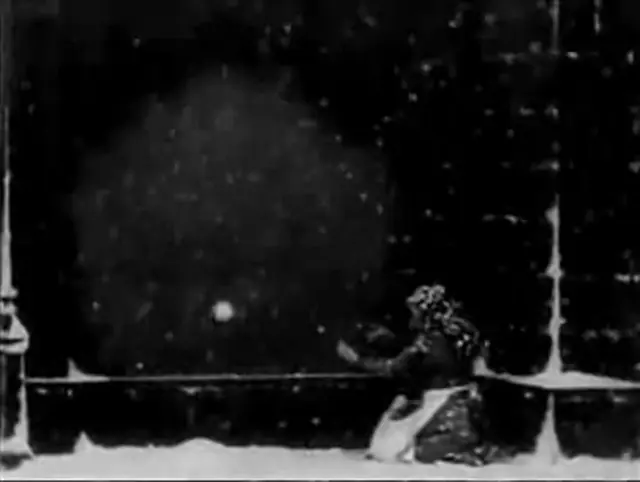
The Little Match Seller, 1902

  1. Why do you think people kept walking past her? What would have made you stop?
  2. The matches gave her a little light. What gives you light when things are hard?
  3. If you met her tonight, what would you do first?

He who oppresses the poor shows contempt for his Maker, but he who is kind to the needy honors him.

Proverbs 14:31

The Christmas Angel, 1904

  1. The girl asked for help, and most people sent her away. Who helped her first, and what did he give her?
  2. Why is it hard to stop for a stranger? What could make it easier?
  3. Think of someone who helped you this year. How could you thank them this week?

Don’t forget to show hospitality to strangers, for in doing so, some have entertained angels without knowing it.

Hebrews 13:2

A Christmas Carol, 1910

  1. Scrooge had plenty and gave nothing. Why do you think giving was so hard for him?
  2. What changed Scrooge: the ghosts, or something inside him? What do you think?
  3. Who near you could use a basket of food this month? What could your family do?

Let each man give according as he has determined in his heart, not grudgingly or under compulsion, for God loves a cheerful giver.

2 Corinthians 9:7

Four pictures

  • Scrooge, or Marley’s Ghost

    Made in England, 1901. About 5 minutes, no sound. Ages 8 and up.

    One of the first films of Charles Dickens’s story. On Christmas Eve a face shows in Scrooge’s door knocker. Marley’s ghost comes in and shows him pictures: Scrooge as a young man with the girl he loved, the Cratchit family at their Christmas table, and a gravestone with his own name on it. The end of the film is lost.

    A ghost in a white sheet and a gravestone appear. Only part of this film survives, so it stops at the grave, before Scrooge changes. Younger children may want someone beside them.

    Proof it is public domain

  • The Little Match Seller

    Made in England, 1902. About 3 minutes, no sound. Ages 8 and up, watched together.

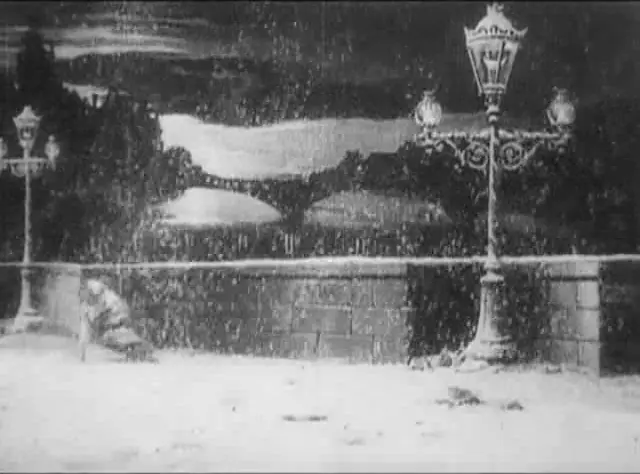
    From the story by Hans Christian Andersen. A barefoot girl tries to sell matches on a snowy night, and no one buys. She sits down in the snow and lights them one at a time. In each flame she sees something she wishes for: a warm fire, a table of food, a Christmas tree with a star, a kind woman in white. Then an angel comes and carries her up. In the morning a man with a lamp finds her in the snow.

    The girl dies of the cold at the end. It is shown gently, with an angel, but it is sad. Watch it beside your child.

    Proof it is public domain

  • The Christmas Angel

    Made in France by Georges Méliès, 1904. About 10 minutes, no sound. Ages 6 and up.

    Its French name means Distress and Charity. A poor family has no food, and the mother is sick in bed. The father sends his daughter out into the snowy city to beg. People push her away from a church door and a baker’s shop. A poor man who collects rags shares his bread and his shawl. She falls in the snow, and people in a motor car stop for her. They take her home, an angel appears in the room, and the family gets a feast and gifts.

    A girl falls in the snow and lies still for a moment. People help her, and it ends well.

    Proof it is public domain

  • A Christmas Carol

    Made by Edison Studios, New York, 1910. About 13 minutes, no sound. Ages 8 and up.

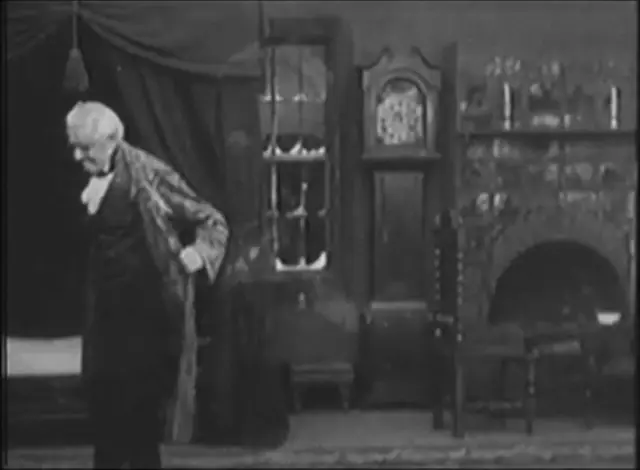
    The Dickens story again, nine years later and much longer. Scrooge sends visitors away from his office. At home a chained ghost, Marley, warns him, and the spirits show him a gravestone with his name. In the morning he runs out into the snow, and the film ends at a family’s table.

    The ghosts are see-through figures. Younger children may want someone beside them.

    Proof it is public domain

The house

A picture house a hundred years ago was often one hall with a screen, a piano and a hand-lettered sign out front.

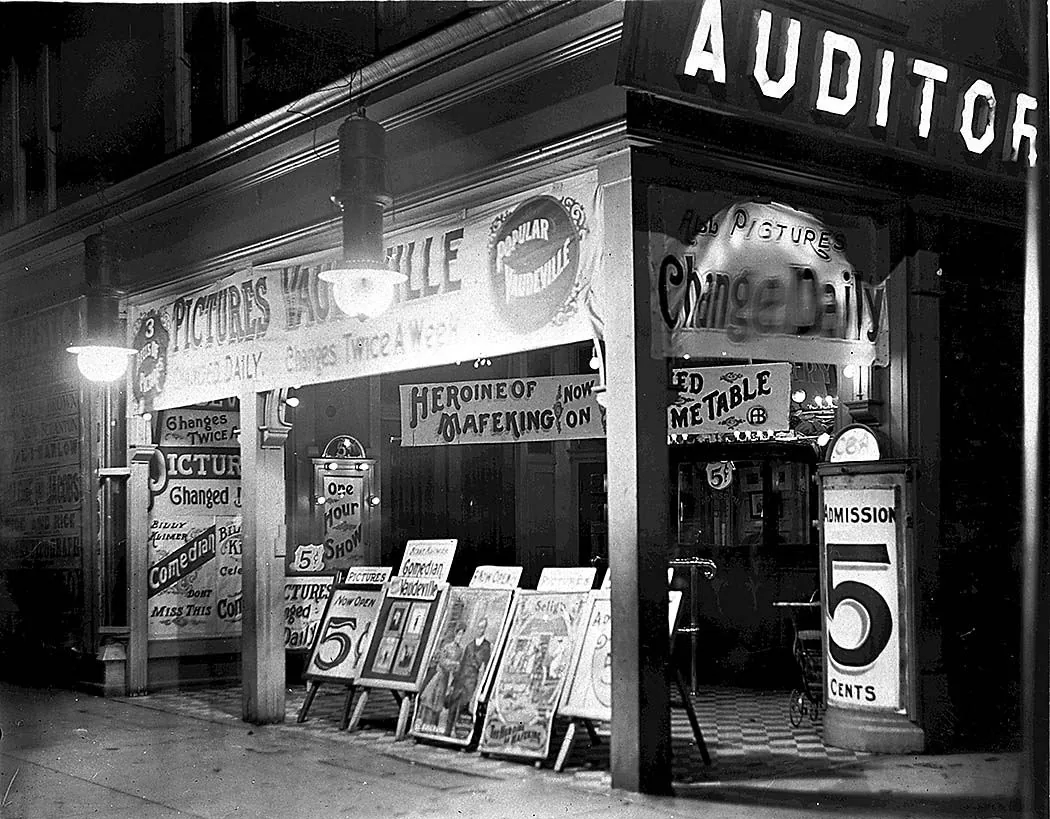
A theater front at night in Toronto, lit by lamps. Signs say pictures, vaudeville, one hour show, admission five cents.
Auditorium Theatre, Toronto, about 1910. The signs say pictures, vaudeville, a one-hour show, five cents.
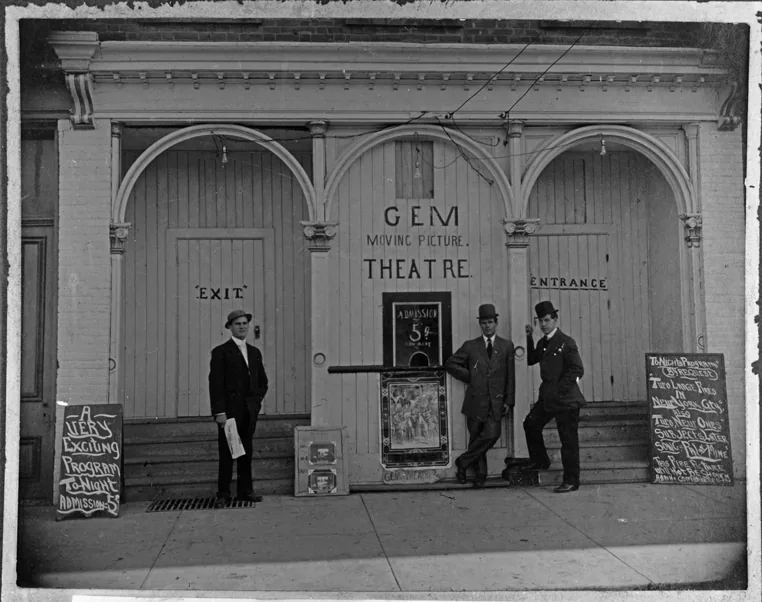
Three men in hats standing in front of the Gem Moving Picture Theatre. A chalkboard on each side of the door.
The Gem Moving Picture Theatre, Whitby, Ontario, 1909. It was the town’s first, and it stayed open for one year.

The stage at the top of this page is the Strand Theatre in Brooklyn, in a photograph printed in 1919. The films and all three photographs are credited on the Credits page.